A
Comprehensive Energy Audit is a systematic and thorough examination of a factory or
organization's energy usage patterns, aimed at identifying opportunities to optimize energy
consumption and reduce energy costs. The objective of a comprehensive energy audit is to
identify, evaluate, and prioritize energy-saving measures based on their potential impact,
cost-effectiveness, and feasibility. Energy Saving
reflection in monthly electricity bill 500Units/Day for 1000KVA MD by comprehensive
Energy Audit is our guarantee.
BNN POWER team of experts use the unique combination of daily monitoring data,
Production data , analytics, and human expertise to bring value to its customers. This
results in optimized machine lifecycle efficiency and improved performance. From avoiding
losses & wastage of electricity to providing solutions that improve circuit efficiency,
our team of experts a force to reckon with. Read on to see what are the other prominent
features.






Find answers to the most common questions about Energy Audits, Industrial Energy Audits, Power Quality, and energy-saving solutions.
An Energy Audit is a systematic assessment of a facility's electrical and mechanical systems to identify energy losses, operational inefficiencies, and opportunities for reducing electricity costs without affecting production.
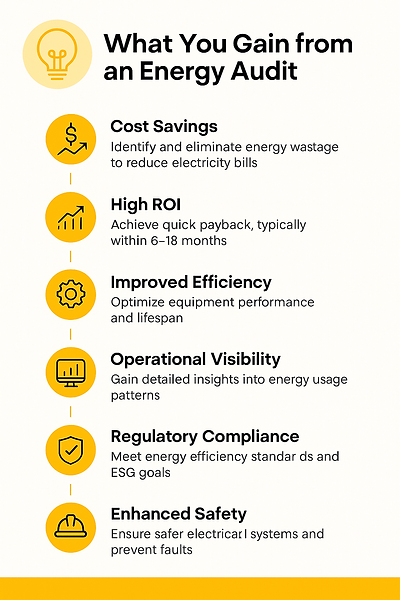
An Energy Audit helps industries reduce electricity bills, improve equipment efficiency, increase system reliability, minimize downtime, and meet energy efficiency objectives.
A Comprehensive Energy Audit involves detailed monitoring, measurements, equipment performance analysis, and financial evaluation to identify high-impact energy-saving opportunities with ROI calculations.
Energy Audits are beneficial for:
Savings vary depending on the facility and existing inefficiencies. Proper implementation of audit recommendations can often achieve significant reductions in electricity consumption while improving operational reliability.
An Industrial Energy Audit typically includes:
The duration depends on plant size, connected load, production process, and monitoring requirements. Small facilities may require a few days, while large industrial plants may require extended monitoring and detailed analysis.
Professional Energy Audits use:
An Energy Audit focuses on reducing energy consumption and operating costs.
A Power Quality Audit identifies electrical issues such as harmonics, voltage fluctuations, transients, imbalance, flicker, and poor power factor that affect equipment reliability.
Most industries should conduct an Energy Audit every 2–3 years or whenever major electrical equipment, production capacity, or utility tariffs change. High-energy-consuming facilities may benefit from more frequent reviews.
A BEE Certified Energy Audit is carried out by qualified Energy Auditors or BEE Empanelled Energy Service Companies (ESCOs) following Bureau of Energy Efficiency guidelines.
Yes. During the audit, issues such as harmonics, low power factor, voltage imbalance, overloads, and transformer losses are identified, helping improve overall power quality and equipment life.
Yes. A professional audit report includes energy consumption analysis, identified losses, recommended improvements, estimated savings, implementation priorities, and ROI calculations.
Yes. Energy Audits reduce energy consumption, lower carbon emissions, improve resource efficiency, and support ESG, sustainability, and green building initiatives.
BNN Power+1
A Preliminary Energy Audit identifies quick energy-saving opportunities through a walkthrough inspection.
A Detailed Energy Audit involves extensive measurements, engineering analysis, financial evaluation, and implementation planning.
Typical requirements include:
Yes. Energy Audits can detect hidden losses caused by overloaded transformers, harmonics, poor power factor, cable losses, inefficient motors, voltage imbalance, and improper equipment operation.